
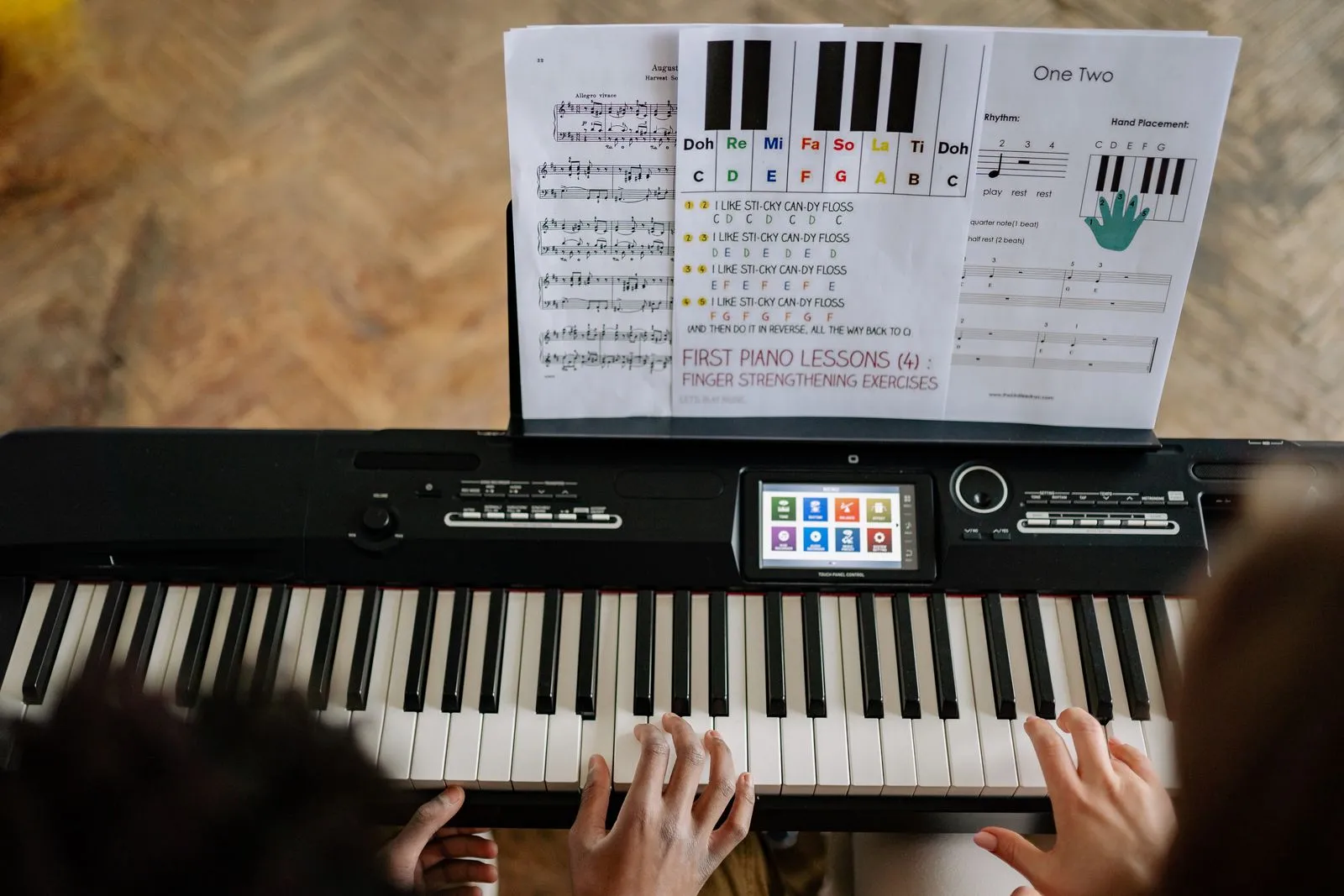
Improvising on piano means making musical choices as you play. You do not need to read a full score or know advanced theory to begin. Start with a few notes, a steady rhythm, or a simple chord, then listen to what happens. These small experiments help you build confidence and discover sounds you enjoy. A calm, unhurried approach works well: there is no need to make every phrase sound finished or polished.
Start With a Few Notes
Choose a small group of nearby white keys, such as the notes C, D, E, G, and A. Play them one at a time in any order, leaving pauses between notes. Keep your attention on how each note sounds against the one before it. Limiting your choices makes it easier to experiment without worrying about finding the “right” note.
Try making a short phrase of three or four notes, then repeat it with one change. You might end on a different note, reverse the first two notes, or leave a longer pause. Repeating a phrase gives your improvisation a sense of shape while still leaving room to explore.
Build a Simple Rhythm
Before adding more notes, tap a simple pattern on your lap or the piano lid. Try an even pulse, then add a pause or one quicker tap. Once the pattern feels comfortable, play a single note in time with it. A clear rhythm can make even a small group of notes sound intentional.
Use a metronome if it helps you keep a steady beat, but begin at a pace that feels easy. You can also count aloud or tap your foot. Let the rhythm stay simple while you change the notes. If you lose the pattern, pause, take a breath, and start again without treating a mistake as a problem.
Add Easy Chords
A chord is a group of notes played together. Try playing C, E, and G in your left hand; this is a C major chord. Hold it for several beats while your right hand explores the small set of notes you chose. The steady chord gives your melody a home base, so you can focus on listening and shaping a phrase.
When you feel ready, move between two simple chords, such as C major and F major. Change chords slowly and notice how the melody feels over each one. You do not need to name every sound as you play. Start by listening for moments that feel settled, surprising, or ready to continue.
Make Practice Easy to Repeat
Set a short timer and choose one task for the session: explore a few notes, create a rhythm, or play a melody over one chord. Keeping the task small makes it easier to begin and gives you something clear to notice. When the timer ends, pause and remember one sound or phrase you would like to try again.
Recording a brief practice on your phone can help you hear patterns you missed while playing. Listen once without judging it, then identify a phrase you liked or a spot where you want more space. Return to that idea next time. If you want guidance, a piano improvisation teacher can help you build exercises around the music you enjoy.
Begin with a few notes, a steady pulse, and one simple chord. Repeat what feels interesting, change one detail at a time, and give yourself room to pause. Improvisation grows through curious listening, not perfect performance. If you would like supportive guidance as you explore, Eugene Piano Studio offers piano improvisation lessons in Eugene.